

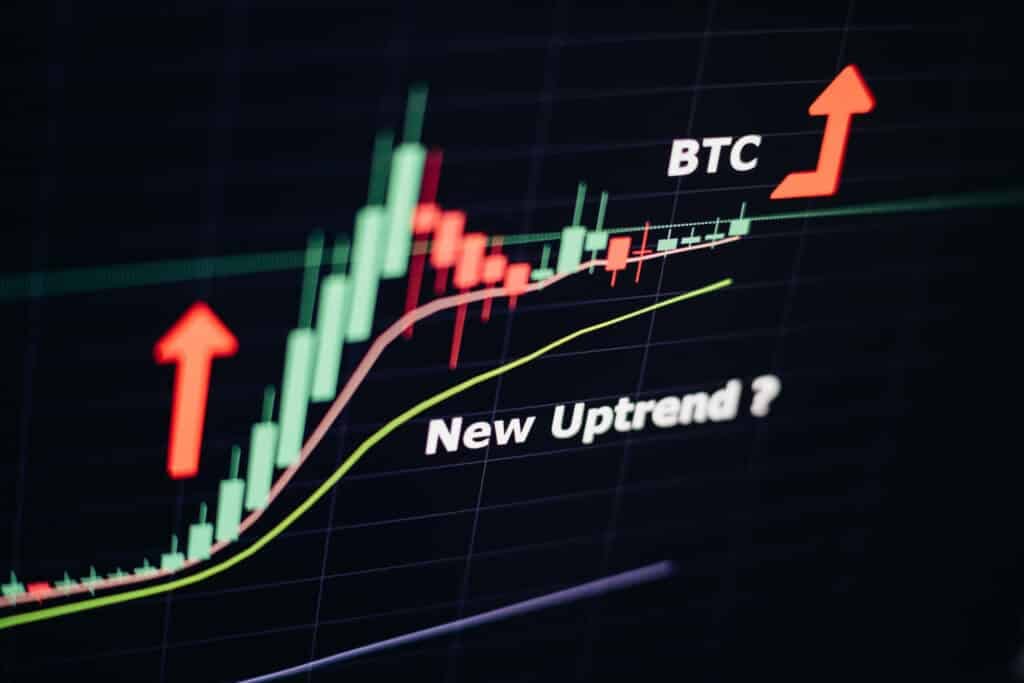
The world of cryptocurrency continues to captivate investors, traders, and tech enthusiasts alike. Bitcoin, as the pioneering and most dominant digital asset, remains at the center of this financial revolution. Since its creation in 2009, Bitcoin has undergone dramatic price swings, from mere cents to tens of thousands of dollars per coin. As we move through 2025, questions surrounding Bitcoin’s future price movements have once again taken center stage. In this article, we will delve into the possible scenarios for Bitcoin’s price in the coming months, exploring macroeconomic influences, technical analysis, market sentiment, and potential catalysts that could shape the trajectory of the world’s first cryptocurrency.
Historical Context
Understanding Bitcoin’s potential future performance necessitates a look into its past. Bitcoin’s price history is characterized by a series of bull and bear cycles, typically influenced by market sentiment, adoption milestones, macroeconomic conditions, and technological developments.
Bitcoin’s first major price surge occurred in 2013, when it hit $1,000 for the first time. After a significant correction, it remained relatively subdued until the 2017 bull run, which saw the price approach $20,000. Following another steep decline, the market experienced a prolonged bear phase until the 2020-2021 bull market, driven by institutional adoption and macroeconomic uncertainty due to the COVID-19 pandemic. Bitcoin reached an all-time high of nearly $69,000 in November 2021.
Subsequent to that peak, the market endured another bear phase through 2022 and into early 2023, driven by regulatory concerns, high-profile collapses (e.g., FTX), and macroeconomic tightening. However, by late 2023 and early 2024, signs of recovery began to emerge, fueled by renewed institutional interest and clearer regulatory frameworks.
Macroeconomic Factors
Bitcoin’s price is increasingly influenced by broader macroeconomic conditions. Factors such as interest rates, inflation, central bank policies, and geopolitical instability all play significant roles in shaping investor sentiment towards cryptocurrencies.
Interest Rates and Inflation
The U.S. Federal Reserve and other central banks significantly influence risk asset markets through their interest rate policies. When rates rise, risk assets like Bitcoin often face downward pressure as capital moves into safer, yield-generating assets. Conversely, lower interest rates typically make non-yielding assets like Bitcoin more attractive.
In 2022 and 2023, aggressive rate hikes aimed at curbing inflation negatively impacted Bitcoin’s price. However, as inflation showed signs of cooling in late 2023, speculation increased that central banks would pivot towards more dovish policies. Any clear indication of rate cuts or monetary easing in the near future would likely act as a bullish catalyst for Bitcoin.
Global Economic Stability
Economic instability, especially in traditional financial systems, often drives interest in decentralized assets. Events such as regional banking crises, sovereign debt issues, or loss of confidence in fiat currencies can enhance Bitcoin’s appeal as a store of value.
Institutional Adoption and Regulation
One of the most significant drivers of Bitcoin’s recent recovery has been renewed institutional interest. Large financial entities such as BlackRock, Fidelity, and Goldman Sachs have either launched or signaled intentions to support Bitcoin-based investment products.
Bitcoin Spot ETFs
The approval and subsequent success of Bitcoin spot ETFs in various jurisdictions have brought significant legitimacy and liquidity to the market. These ETFs allow institutional investors to gain exposure to Bitcoin without directly holding the asset, reducing friction and custody risks. Increased ETF inflows have the potential to drive prices higher as demand outpaces available supply.
Regulatory Clarity
Increased regulatory clarity, especially in the United States and Europe, has helped calm investor nerves. Clear guidelines reduce uncertainty, attract more conservative capital, and enhance market integrity. While overregulation remains a concern, balanced and consistent policy frameworks are expected to benefit Bitcoin in the medium to long term.
Halving and Supply Dynamics
Bitcoin’s supply issuance is governed by a deflationary model, with the block reward halved approximately every four years. The next halving is scheduled for April 2024, which will reduce the reward from 6.25 BTC to 3.125 BTC per block. Historically, Bitcoin halvings have preceded significant price increases due to the reduction in new supply entering the market.
The reduction in daily mined Bitcoin often creates a supply shock, especially if demand remains constant or increases. With growing institutional demand and adoption in emerging markets, the 2024 halving could act as a strong upward catalyst for Bitcoin’s price.
Technical Analysis
Technical analysis (TA) remains a popular method for predicting Bitcoin’s price movements. By examining historical price data, trading volumes, and chart patterns, traders attempt to identify probable future trends.
Key Support and Resistance Levels
As of early 2025, Bitcoin has reclaimed key resistance levels near $50,000 and is attempting to establish a new trading range. The next major resistance zone lies between $60,000 and $65,000, a region that acted as both support and resistance during previous bull markets.
Support levels are found near $45,000 and $40,000. A sustained break below $40,000 would signal a potential bearish trend reversal, while a strong move above $65,000 could open the door to retesting all-time highs.
Moving Averages and Momentum Indicators
Bitcoin is currently trading above its 200-day moving average, typically a bullish signal. Additionally, momentum indicators such as the Relative Strength Index (RSI) and Moving Average Convergence Divergence (MACD) suggest a positive trend, though overbought conditions could prompt short-term corrections.
Market Cycles and Sentiment Analysis
Bitcoin’s market cycles often follow a pattern of accumulation, uptrend, distribution, and downtrend. Many analysts believe the current phase is an early uptrend or reaccumulation phase following the 2022-2023 bear market. Sentiment indicators, such as the Fear and Greed Index, have shifted from “fear” to “neutral” or “greed,” indicating improving investor confidence.
Geopolitical Events and Bitcoin
Geopolitical developments can have profound impacts on Bitcoin’s price. For instance, conflicts, sanctions, and capital controls can drive increased demand for decentralized assets.
Conflict and Sanctions
In regions facing geopolitical turmoil, Bitcoin often sees a spike in local demand as residents seek to protect wealth or move capital across borders. During the Russia-Ukraine conflict, for example, both Russian and Ukrainian citizens turned to Bitcoin for economic mobility.
Similarly, sanctions that restrict access to global financial systems can prompt increased use of cryptocurrencies. While this use case draws regulatory scrutiny, it also underscores Bitcoin’s unique utility as a censorship-resistant asset.
Capital Flight and Economic Turmoil
Countries experiencing high inflation, currency devaluation, or political instability often witness increased Bitcoin adoption. In Latin America and parts of Africa, Bitcoin is increasingly viewed as a hedge against economic uncertainty.
Emerging Technologies and Layer 2 Solutions
The Bitcoin ecosystem is also evolving, with new technologies and scalability solutions enhancing its usability and value proposition.
Lightning Network
The Lightning Network, a layer-2 scaling solution for Bitcoin, enables faster and cheaper transactions. Adoption of the Lightning Network has increased significantly, with use cases in remittances, microtransactions, and merchant payments. Greater adoption could enhance Bitcoin’s utility and drive demand.
Smart Contracts and DeFi on Bitcoin
Projects like RSK and Stacks aim to bring smart contract functionality to the Bitcoin blockchain. While Ethereum remains the dominant platform for decentralized finance (DeFi), Bitcoin-based DeFi could attract users seeking the security and liquidity of the Bitcoin network.
Whale Behavior and On-Chain Analysis
Monitoring large holders (“whales”) and on-chain metrics provides valuable insights into market dynamics.
Accumulation Trends
On-chain data suggests that long-term holders and institutional investors have been steadily accumulating Bitcoin throughout 2023 and into 2024. This behavior often precedes major price rallies, as reduced supply on exchanges creates upward price pressure.
Exchange Balances and Dormant Supply
Bitcoin balances on centralized exchanges have been decreasing, indicating that investors are moving assets into long-term storage. At the same time, the percentage of Bitcoin that has not moved in over a year has reached record highs, suggesting growing conviction among holders.
Retail Interest and Media Hype
Retail investor sentiment also plays a crucial role in Bitcoin’s price dynamics. Google Trends data, social media activity, and trading volume on retail platforms like Coinbase and Binance can all serve as indicators of rising or waning interest.
As Bitcoin garners more media attention—whether due to price rallies, institutional adoption, or regulatory changes—retail participation tends to follow. Historically, peak retail interest has coincided with market tops, while periods of apathy have offered strong buying opportunities.
Predictions and Scenarios
Given the current macroeconomic environment, on-chain trends, and upcoming halving event, analysts have outlined several potential scenarios for Bitcoin’s price in the coming months:
Bullish Scenario
In the bullish case, Bitcoin breaks above the $65,000 resistance and enters a new price discovery phase. Institutional inflows via ETFs, rate cuts from central banks, and strong post-halving narratives could propel Bitcoin toward $90,000–$100,000 by late 2025.
Neutral Scenario
In a more conservative scenario, Bitcoin continues to range between $45,000 and $65,000. This scenario assumes mixed macro signals, cautious investor sentiment, and a gradual adoption curve. Prices could consolidate in this range until stronger catalysts emerge.
Bearish Scenario
In a bearish outlook, Bitcoin fails to hold key support levels and declines below $40,000. This could be triggered by unexpected regulatory crackdowns, global financial stability, or a sharp macroeconomic downturn. In such a case, Bitcoin could retest levels around $30,000–$35,000.
Final Thoughts
While Bitcoin’s price in the coming months remains uncertain, a combination of technical, fundamental, and macroeconomic indicators suggests increasing tailwinds for the cryptocurrency. Investors should remain vigilant, conduct thorough research, and consider both risks and opportunities as Bitcoin continues to evolve as a global asset class.