
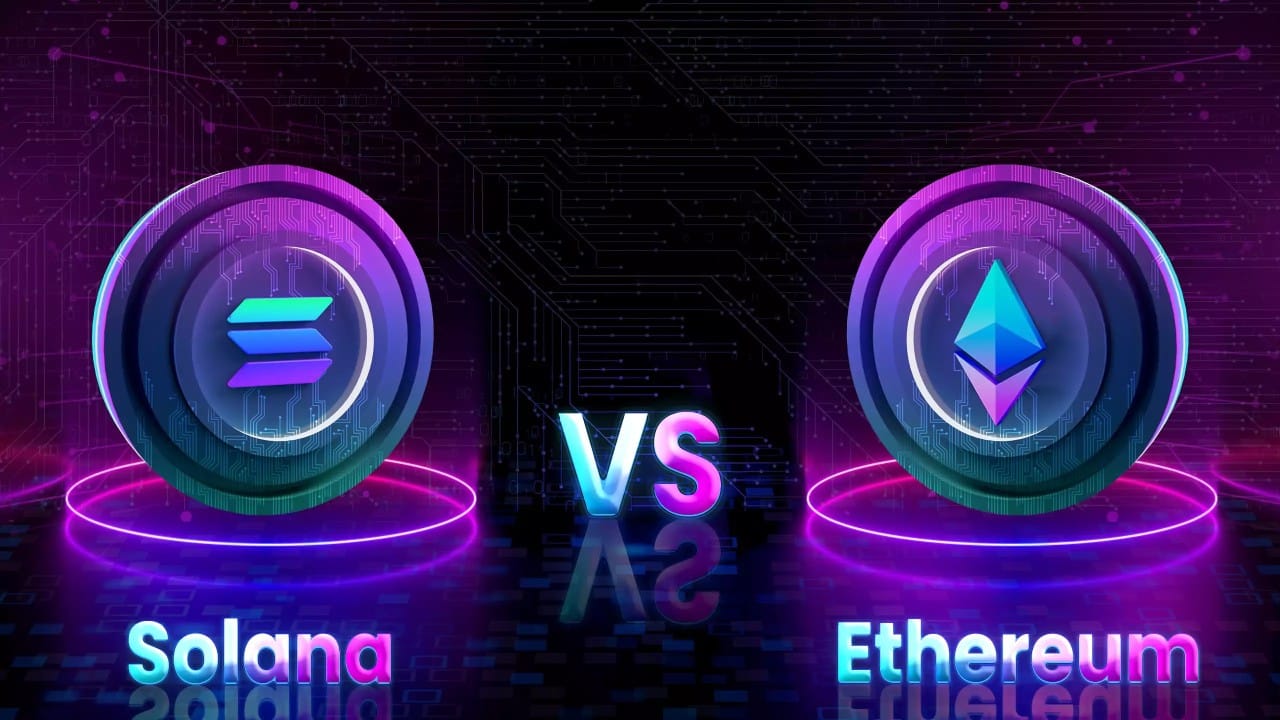
In the ever-evolving world of blockchain technology, Ethereum and Solana have emerged as two of the most prominent platforms in the decentralized ecosystem. As investors seek to capitalize on the growth of decentralized finance (DeFi), non-fungible tokens (NFTs), and Web3 applications, the debate surrounding Ethereum vs. Solana continues to heat up. Both blockchains offer compelling advantages and unique characteristics that cater to different types of developers, users, and investors. But when it comes to investment potential, which one truly stands out?
Understanding Ethereum
Ethereum, launched in 2015 by Vitalik Buterin and a team of developers, was the first blockchain to introduce smart contracts—self-executing agreements written in code. This innovation expanded blockchain functionality beyond simple financial transactions (like those of Bitcoin) to a full-fledged decentralized computing platform.
Ethereum has become the leading platform for DeFi, NFTs, and decentralized applications (dApps), with thousands of projects and tokens built on its blockchain. The Ethereum Virtual Machine (EVM) provides a robust environment for developers to create complex applications using Solidity, Ethereum’s proprietary programming language.
As of now, Ethereum is transitioning from a proof-of-work (PoW) consensus mechanism to a proof-of-stake (PoS) model via Ethereum 2.0, aiming to address its long-standing issues related to scalability, energy consumption, and network congestion.
Ethereum’s Strengths
One of Ethereum’s most significant strengths lies in its first-mover advantage. It has a massive developer community, deep liquidity, and a wide array of dApps that contribute to its ecosystem. Additionally, Ethereum benefits from strong institutional support and widespread recognition, making it a go-to platform for developers and investors alike.
Ethereum’s shift to PoS through the Ethereum 2.0 upgrade is expected to significantly reduce its carbon footprint and increase transaction throughput, positioning it as a more sustainable and scalable solution.
The Ethereum blockchain also enjoys strong security. With thousands of nodes worldwide, it is highly decentralized, making it resilient against attacks and censorship.
Challenges Facing Ethereum
Despite its strengths, Ethereum is not without its flaws. One of the most persistent criticisms is its high gas fees—the costs associated with executing transactions on the network. During peak usage, gas fees can skyrocket, making the platform less accessible for small-scale users.
Scalability has also been a major concern. While Ethereum 2.0 promises improvements, the full rollout is still in progress and may take years to fully realize.
Moreover, Ethereum’s dominance has led to congestion, slowing down transaction speeds and impacting user experience. These limitations have opened the door for alternative blockchains like Solana to gain traction.
Introducing Solana
Solana, launched in 2020 by Anatoly Yakovenko, is a high-performance blockchain designed to address the limitations of older blockchain networks. It uses a unique combination of proof-of-history (PoH) and proof-of-stake (PoS) mechanisms to achieve high throughput and low latency.
Solana has gained popularity for its ability to handle thousands of transactions per second (TPS) with minimal fees, making it attractive for developers looking to build scalable dApps and DeFi protocols.
Solana’s Strengths
Speed and scalability are Solana’s defining features. Its architecture allows it to process over 65,000 TPS under ideal conditions, a significant leap compared to Ethereum’s current capacity. This performance is achieved without compromising decentralization to the same extent as many other high-speed blockchains.
Low transaction fees are another major advantage. Solana transactions typically cost a fraction of a cent, making it highly accessible for users and developers. This cost-efficiency has made Solana a popular choice for NFT platforms and gaming applications.
The Solana ecosystem is growing rapidly, with a wide array of DeFi, NFT, and Web3 projects being launched. Its developer-friendly environment and support from venture capital firms have helped it gain traction quickly.
Challenges Facing Solana
Despite its impressive technical capabilities, Solana has faced several hurdles. One of the main concerns is network reliability. The blockchain has experienced multiple outages, raising questions about its stability and robustness.
Solana’s decentralization is also a point of contention. While it is more decentralized than many newer chains, it does not match Ethereum’s level of node distribution and community governance.
Moreover, as a newer platform, Solana lacks the mature ecosystem and trust that Ethereum has built over the years. This can make investors wary, especially in a market that values long-term credibility.
Ethereum vs. Solana: Developer Experience
Developer experience is crucial for the growth of any blockchain ecosystem. Ethereum has a more mature developer community and extensive documentation, which makes onboarding new developers relatively easier. Solidity is widely adopted, and many tools have been built around the Ethereum ecosystem.
Solana, on the other hand, uses Rust and C, which are powerful but less commonly used in the blockchain space. This can create a steeper learning curve for new developers. However, Solana has made significant strides in improving its developer tooling and educational resources.
Ecosystem and Adoption
Ethereum boasts the largest and most active ecosystem in the blockchain space. Major DeFi platforms like Uniswap, Aave, and MakerDAO are built on Ethereum. It is also the leading platform for NFTs, with marketplaces like OpenSea and Rarible leveraging its infrastructure.
Solana’s ecosystem is growing but is still relatively young. It has seen success with platforms like Serum (a decentralized exchange) and Magic Eden (an NFT marketplace). The blockchain has also been proactive in supporting new projects through grants and hackathons.
While Solana is gaining momentum, Ethereum’s ecosystem remains unmatched in terms of diversity, depth, and liquidity.
Tokenomics and Investment Potential
Ethereum’s native token, ETH, is widely used as “gas” for transactions and smart contract execution. It is also staked to secure the network in Ethereum 2.0. ETH has become a foundational asset in DeFi, often used as collateral or paired with other tokens in liquidity pools.
Solana’s token, SOL, is used for transaction fees, staking, and participating in governance. SOL has seen significant price appreciation due to the platform’s growth and investor interest.
From an investment standpoint, Ethereum is considered a blue-chip asset in the crypto space. Its established track record, network security, and developer activity provide a level of stability that appeals to institutional and retail investors alike.
Solana offers high growth potential, especially for those looking to invest in emerging technologies. Its scalability and low fees make it a strong contender for future adoption, but it carries higher risk due to its relative newness and technical challenges.
Security and Decentralization
Ethereum is often praised for its security and decentralization. The network has thousands of nodes and a strong culture of community governance. Its long-standing presence in the market has made it a trusted platform for developers and users.
Solana, while decentralized, has fewer nodes and has faced criticism over its validator requirements. The network’s past outages have raised concerns about its resilience and ability to handle large-scale adoption.
Market Sentiment and Community Support
Ethereum has a massive and dedicated community that supports its development and growth. It also enjoys strong support from institutional investors, developers, and thought leaders in the blockchain space.
Solana’s community is energetic and innovative, with a focus on speed, efficiency, and onboarding new users. While smaller in scale, the Solana community has shown resilience and adaptability in the face of challenges.
Regulatory Considerations
Both Ethereum and Solana operate in a complex regulatory landscape. Ethereum’s transition to PoS has helped clarify its status in some jurisdictions, though regulatory scrutiny continues across the broader crypto market.
Solana, being newer, faces additional uncertainties. However, its team has been proactive in engaging with regulators and ensuring compliance with evolving standards.
Final Thoughts on Investment Strategy
Choosing between Ethereum and Solana as an investment ultimately depends on your risk tolerance, time horizon, and belief in the respective platforms. Ethereum offers a more established, secure, and decentralized option with a proven track record. Solana, on the other hand, presents an opportunity for high returns through innovation, speed, and scalability.
For conservative investors seeking long-term value, Ethereum may be the safer bet. For those willing to take on higher risk for the possibility of outsized gains, Solana could be a compelling choice.
In a diversified portfolio, both assets can play important roles. Ethereum can provide stability and broad exposure to DeFi and NFTs, while Solana can offer growth potential and access to emerging projects.